
Essential Vaccinations for Kittens and Adult Cats
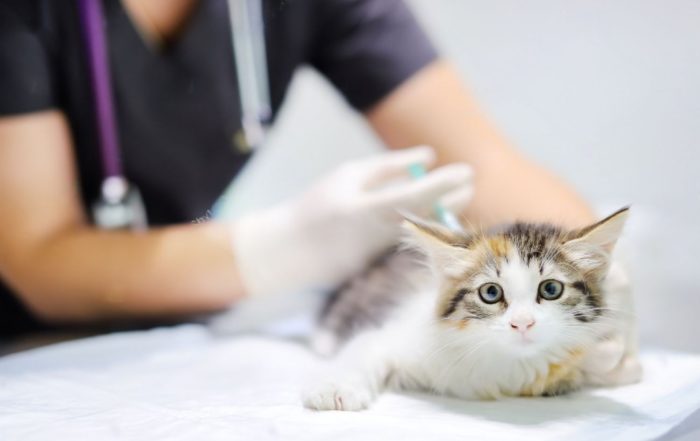
Vaccinations help protect your cat from serious infectious diseases and stop them from passing infections on to other animals in your home or neighborhood.
Getting your cat vaccinated is one of the most important things you can do in your first few weeks as a cat owner.
When Should Cats Be Vaccinated?
Your kitten will need two sets of vaccinations: the first at nine weeks old and a second booster set at three months.
After that, kittens and adult cats usually need “booster” vaccines once a year.
Until your kitten is fully vaccinated (and spayed or neutered), you should keep them indoors.
Which Diseases Can Vaccinations Protect Against?
Cats are usually vaccinated against:
- Cat flu (feline herpesvirus and feline calicivirus)
- Feline infectious enteritis
- Feline leukemia virus
Your vet can advise you on which vaccinations your kitten or adult cat needs to help protect them from infectious diseases. When you bring a new kitten home, the first thing to do is register them with a local vet, who can decide on and give the vaccinations they need.
How Much Do Cat Vaccinations Cost?
Prices vary from vet to vet, and costs depend on which vaccinations your kitten or cat receives.
Ask your vet whether they offer a pet health plan that spreads the cost of preventive care, such as regular check-ups, annual vaccinations and flea and worm treatments.
How Long Do Vaccinations Last?
Some vaccines are given as yearly boosters. Your vet will give you a vaccination record, which you should keep somewhere safe.
What If I Adopt a Kitten — Does She Need Vaccinating?
If you adopt a cat, she should be vaccinated before she settles into your home and mixes with other animals.
My Cat Feels Unwell After Vaccination — What Should I Do?
Vaccines are preparations that resemble infectious agents such as bacteria or viruses, but don’t cause disease.
When given to your cat, they stimulate and train the immune system to protect against those infections.
But what should you do if your cat feels unwell after a vaccination?
In very rare cases, cats have allergic reactions to vaccines. Mild reactions can include hives, itching, redness, swelling around the eyes, lips and neck, and perhaps a slight fever.
Severe allergic reactions can occasionally cause breathing difficulties, weakness, vomiting, diarrhea and pale gums.
What Are the Risks of Vaccination?
As with any medicine, vaccinating cats carries some risk. Expected reactions include a mild fever, lethargy, reduced appetite and local swelling at the injection site; these usually settle within a few days. If they don’t, contact your vet.
If swelling near the injection site lasts more than three weeks or starts to grow, contact your vet straight away.
A persistent reaction like this can be a sign of a type of cancer called an injection-site sarcoma. These rare tumors are thought to result from vaccine-related inflammation.
How Do Vaccines Work?
After vaccination, the immune system is trained to recognize infectious agents by producing proteins called antibodies, which activate certain cells to destroy the disease-causing agents.
So when a vaccinated cat meets these agents in the future, her body quickly produces antibodies and activates the cells that recognize them, triggering an immune response that eliminates the invader.
While vaccines are one of the greatest achievements in preventive medicine, no vaccine is 100 percent effective or gives every cat the same level of protection.
That’s why it’s still important to limit vaccinated cats’ exposure to other cats or environments where infectious agents may be present.